
Niche Skin Scent Original · Perfume History · Part II
She did not bring fragrance to an unscented France. But Catherine de’ Medici may have changed who displayed it, how it signalled status, and which Italian luxuries the French court wanted to imitate.
In the first part of this story, we examined the famous claim that Renato Bianco — René le Florentin — followed Catherine de’ Medici to France and taught the country the art of perfume.
The surviving evidence does not allow us to repeat that story with such certainty.
Yet rejecting the legend does not mean Catherine had no influence. It means asking a better question.
If Catherine did not invent French perfumery,
what might she genuinely have changed?

France already possessed a culture of scent
When Catherine arrived in France in 1533, fragrance was not unknown there. Scented waters, aromatic oils, incense, pomanders, medicinal distillates and fragranced objects had long circulated through European courts, religious institutions, apothecaries and trade networks.
Knowledge did not travel in a straight line from Florence to Paris. Ingredients, recipes and techniques moved between the Mediterranean, the Islamic world, Spain, Italy, France and Northern Europe over centuries.
The popular version of the story imagines one sophisticated Italian woman bringing perfume to a country that had none. History is more complicated — and more interesting.
Catherine’s plausible influence was not invention. It was visibility, patronage and fashion at the highest level of court.
She made Italian luxury politically visible
Catherine entered France as a Medici bride. Her Florentine identity mattered. She arrived with the cultural associations of a wealthy Italian court: refined objects, elaborate dress, cosmetics, aromatic preparations and the prestige of specialist craft.
Not every fashion later credited to her can be documented as her personal invention. But a royal woman could make an object desirable simply by placing it inside the theatre of court life.
At court, perfume was never only about smelling pleasant. It could communicate proximity to power, access to expensive materials, knowledge of distant trade routes and the leisure required to cultivate taste.
Catherine may therefore have strengthened the relationship between fragrance and status. What she wore, exchanged or favoured could be copied by courtiers who wished to speak the same social language.
Perfumed gloves: influence, not ownership
Perfumed gloves have become the central object in Catherine’s fragrance legend. The usual story says that she introduced them to France, after which Grasse transformed from a leather town into the capital of perfume.
There is a credible core beneath the exaggeration. Scented gloves were fashionable luxury objects in sixteenth-century Europe, and Catherine’s court is closely associated with their prestige. Fragrance helped soften the aggressive odour of treated leather while turning a practical accessory into an intimate sensory object.
But the practice did not belong to Catherine alone. Perfumed gloves circulated across Spain, Italy, France and England; they were worn, gifted and traded by elite men and women. Their history reflects exchange between courts and crafts rather than a single moment of invention.
A more careful conclusion is that Catherine may have helped accelerate their desirability within the French court. She did not create the scented glove, but her position could make it more visible, imitated and culturally powerful.
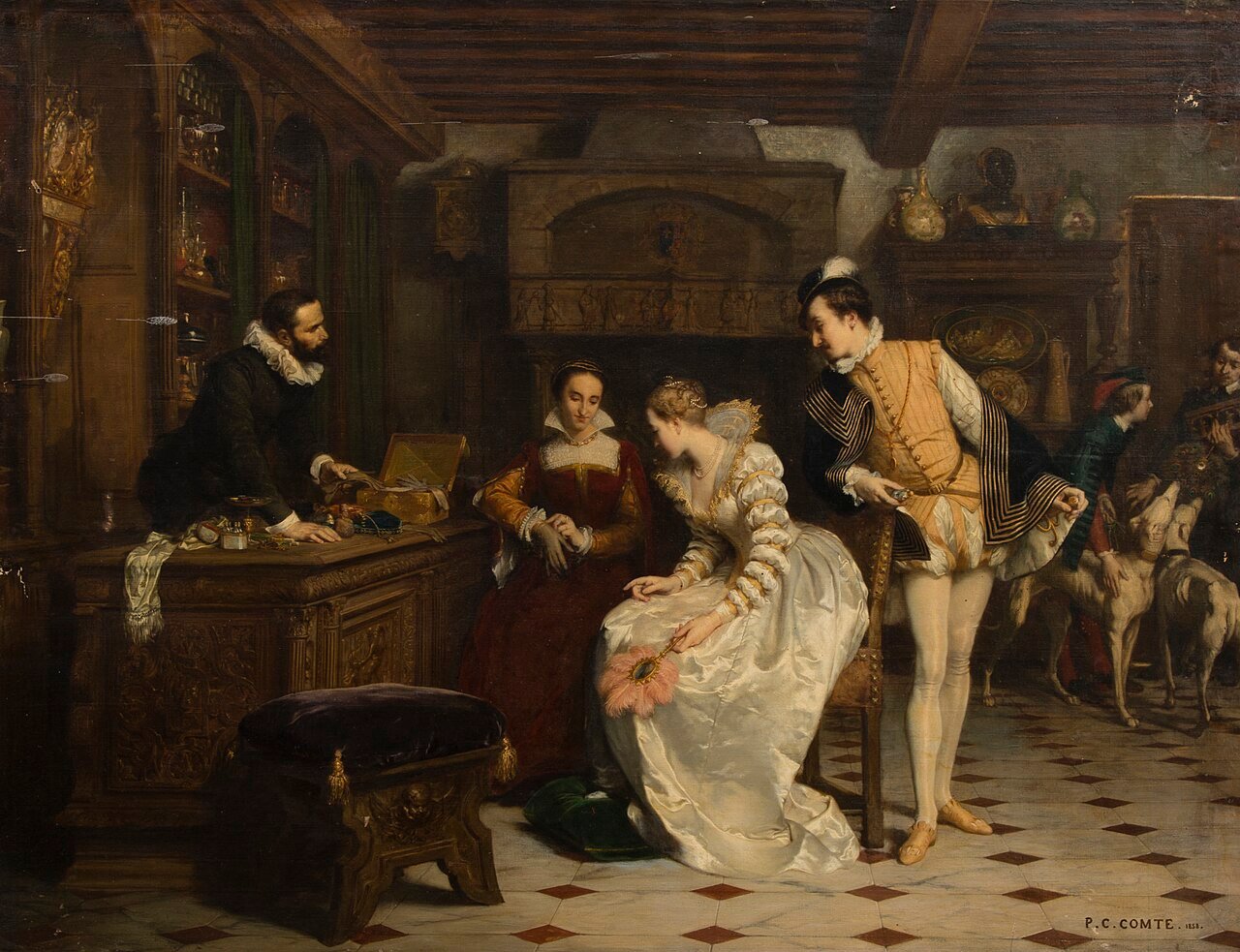
The timeline matters
Catherine died in 1589. The French glove-maker-perfumers received their famous royal recognition in the seventeenth century, and the professional and agricultural rise of French perfumery unfolded over generations.
That distance matters. A later industry cannot be explained by one queen, one wedding or one perfumer.
France’s eventual authority in fragrance grew from many forces: leather-working, guild organisation, access to aromatic materials, the cultivation of flowers around Grasse, court consumption, international trade and the accumulated expertise of artisans.
Catherine belongs to this history as a powerful cultural figure. She should not replace the craftspeople, merchants and networks that actually built it.
How patronage changes culture
Royal influence rarely works like a technical invention. A queen does not need to formulate every essence or tan every glove to affect taste.
Patronage gives specialists access. Display creates imitation. Gifts move objects between courts. Ritual turns private taste into public fashion.
This is where Catherine’s role becomes both plausible and significant. Her household may have offered Italian practitioners, objects and aesthetic habits greater visibility in France. Her taste could encourage demand. Her image could connect scent with sophistication, secrecy and power.
That kind of influence is harder to dramatise than the arrival of a single legendary perfumer. It is also how culture usually changes.
Then came the “poison queen”
Catherine’s fragrance story was shaped not only by luxury, but by hostility. As a foreign-born woman exercising political power during violent religious conflict, she became an ideal target for stories about secrecy, astrology, poison and Italian intrigue.
Perfume fitted that image perfectly. It was invisible, intimate and capable of disguising other substances. A scented object could therefore become, in the imagination, both beautiful and lethal.
Later historians, novelists and artists repeated the poisoned-glove story until atmosphere began to resemble evidence. The more seductive the scene became, the less often anyone asked when the details first appeared or whether contemporary records supported them.
The legend tells us something real — but not necessarily about a murder. It tells us how easily female power, foreignness and scent could be transformed into suspicion.
Her historical influence may have been cultural. Her later reputation became theatrical.
What can we responsibly say?
Catherine de’ Medici did not bring perfume to a scentless France.
She did not single-handedly create Grasse, the French fragrance industry or the profession of the glover-perfumer.
What she may genuinely have done was amplify Italian luxury practices at the French court, strengthen the prestige of fragranced accessories and help make scent part of an especially visible language of rank, refinement and power.
That is not a smaller legacy. It is simply a more credible one.
The final note
Catherine did not give France its first perfume.
She may have helped give perfume a new position at court.
Next in the Journal: how Grasse moved from leather and scented gloves towards the identity of a perfume capital — and why that transformation took far longer than the legend suggests. →
Niche Skin Scent
Selected. Not advertised.
Editorial note: This article separates documented developments from later attribution. Where direct evidence of Catherine’s personal role remains limited, the wording is deliberately cautious.
From history to skin
Continue the story on your skin
Perfume history becomes meaningful when you experience fragrance on your own skin. Discover our personally curated niche perfumes or begin with a travel-size discovery.
Niche Skin Scent Boutique · Unit 3 · Leixlip Shopping Mall